4 hr 30 min
Vistula River Cruise to Tyniec Abbey
- Entry ticket
- Mobile voucher
- Valid same day
- Free cancellation
Glide past centuries of history, arrive at a Benedictine sanctuary
Compare fares, pick the fit — all bookings are mobile-voucher and eligible for free cancellation where shown.
4 hr 30 min
45 min
1 hr
Selecting the right ticket for kraków vistula river cruises to tyniec abbey allows you to balance independent exploration of the monastery grounds with the historical insights provided by the museum exhibits. Visitors should choose between a standard museum entrance or a combined pass to fully experience this landmark's spiritual and architectural heritage.
| Museum Entry Standard Admission |
Top pick Joint Abbey Ticket Museum and Site Access |
|
|---|---|---|
| Entrance fee | 8 PLN | 8 PLN |
| Access areas | Abbey Museum | Abbey Museum and Monastery Grounds |
| Visit style | Self-guided | Self-guided with museum focus |
| Wait time | Minimal | Minimal |
| Best for | Budget-conscious visitors | First-timers seeking full access |
| See tickets & prices |
Verdict: For the most comprehensive experience of these kraków vistula river cruises to tyniec abbey tickets, the joint ticket is recommended to provide access to both the museum's historical collections and the monastery grounds.
Worth it for river enthusiasts and abbey lovers
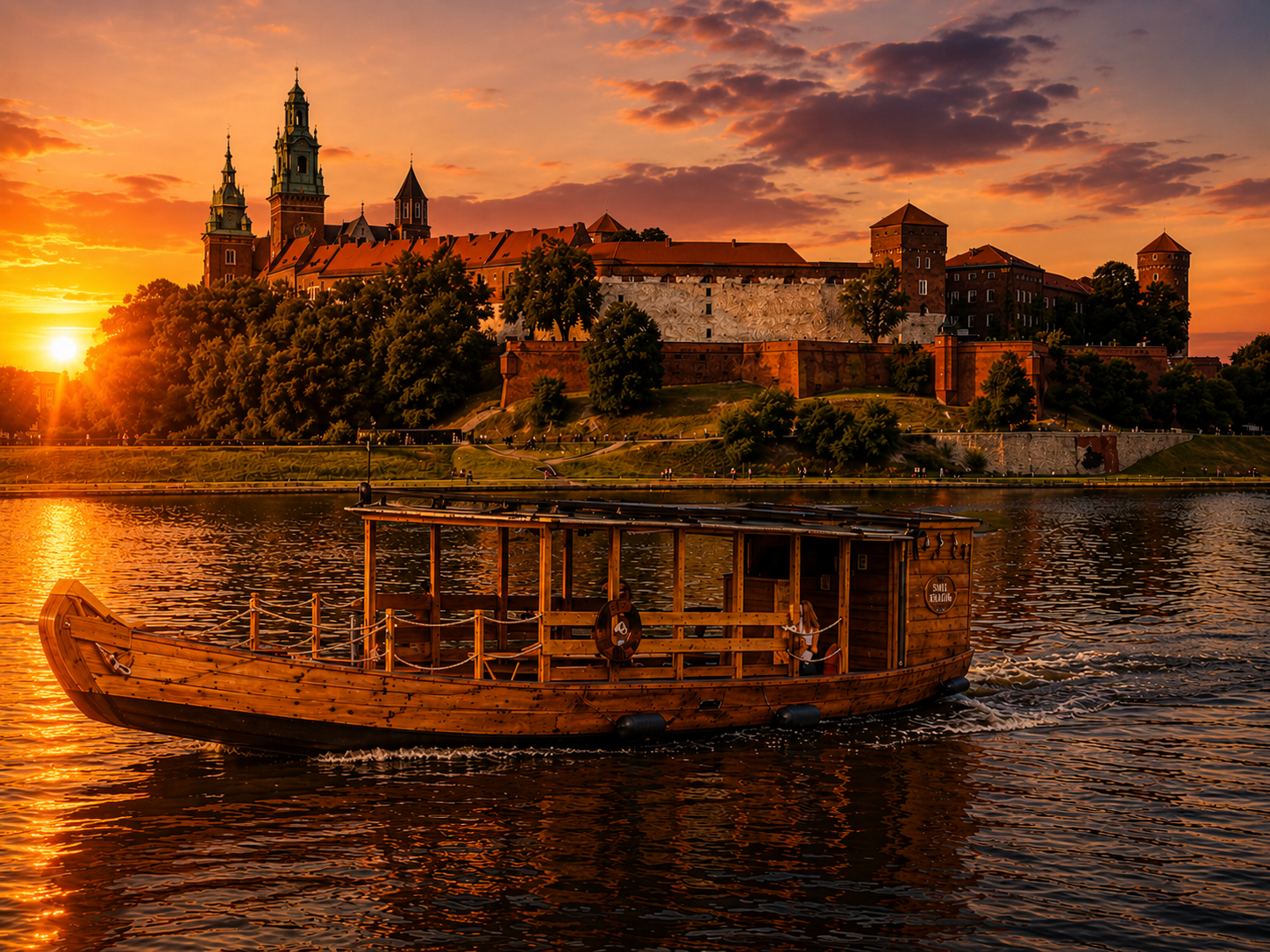
The kraków vistula river cruises to tyniec abbey combine a scenic river journey with access to one of Poland's oldest Benedictine monasteries, founded in 1044. The cruise itself offers unobstructed views of Kraków's southern riverbanks, passing limestone cliffs and wooded stretches rarely visible from the road. Once at Tyniec, the 8 PLN abbey museum fee grants entry to Romanesque cloisters, baroque interiors, and the abbey church where monks still observe daily offices. The journey suits visitors who value contemplative scenery over rapid sightseeing—budget roughly three hours round-trip, including an hour ashore. Vistula River cruises with audio commentary add historical context during the sail, while sunset departures on traditional wooden boats enhance the pastoral atmosphere. Skip it if you're pressed for time or prefer urban landmarks; the abbey's appeal lies in its monastic continuity and riverside solitude rather than dramatic architecture. For those drawn to Benedictine heritage and the slow rhythm of the Vistula, Tyniec justifies the half-day investment.
Bottom line: Kraków Vistula River cruises to Tyniec Abbey reward patience with monastic tranquility and riverine beauty that road routes miss entirely.
They complement each other; most visitors who do both call the boat experience the more relaxing way to reach the monastery, while cycling is praised for its active, independent exploration of local Kraków landmarks.
|
Top pick Boat Cruise |
Bike Tour | |
|---|---|---|
| Primary transit | River vessel | Hybrid or trekking bike |
| Total duration | 4–4.5 hours | 3–5 hours |
| Active intensity | Low (sightseeing focus) | Moderate (physical exertion) |
| Route experience | Panoramic riverside views | Vistula cycling path trail |
| Key benefit | Relaxed, guided narration | Flexible, independent pacing |
| Group setting | Public or private boat | Guided group or solo |
| Cost approach | Fixed ticket pricing | Rental or guided tour fee |
| See tickets & prices |
Verdict: If you seek a peaceful, scenic passage to the Benedictine Abbey in Tyniec, kraków vistula river cruises to tyniec abbey tours are the preferred choice, whereas cycling offers a more personal, active adventure along the Vistula. Choose your kraków vistula river cruises to tyniec abbey tickets for a stress-free journey, or opt for a kraków vistula river cruises to tyniec abbey tour variation if you prefer the freedom of two wheels.
Hand-picked experiences loved by thousands of travelers
1 hour
Free Cancellation
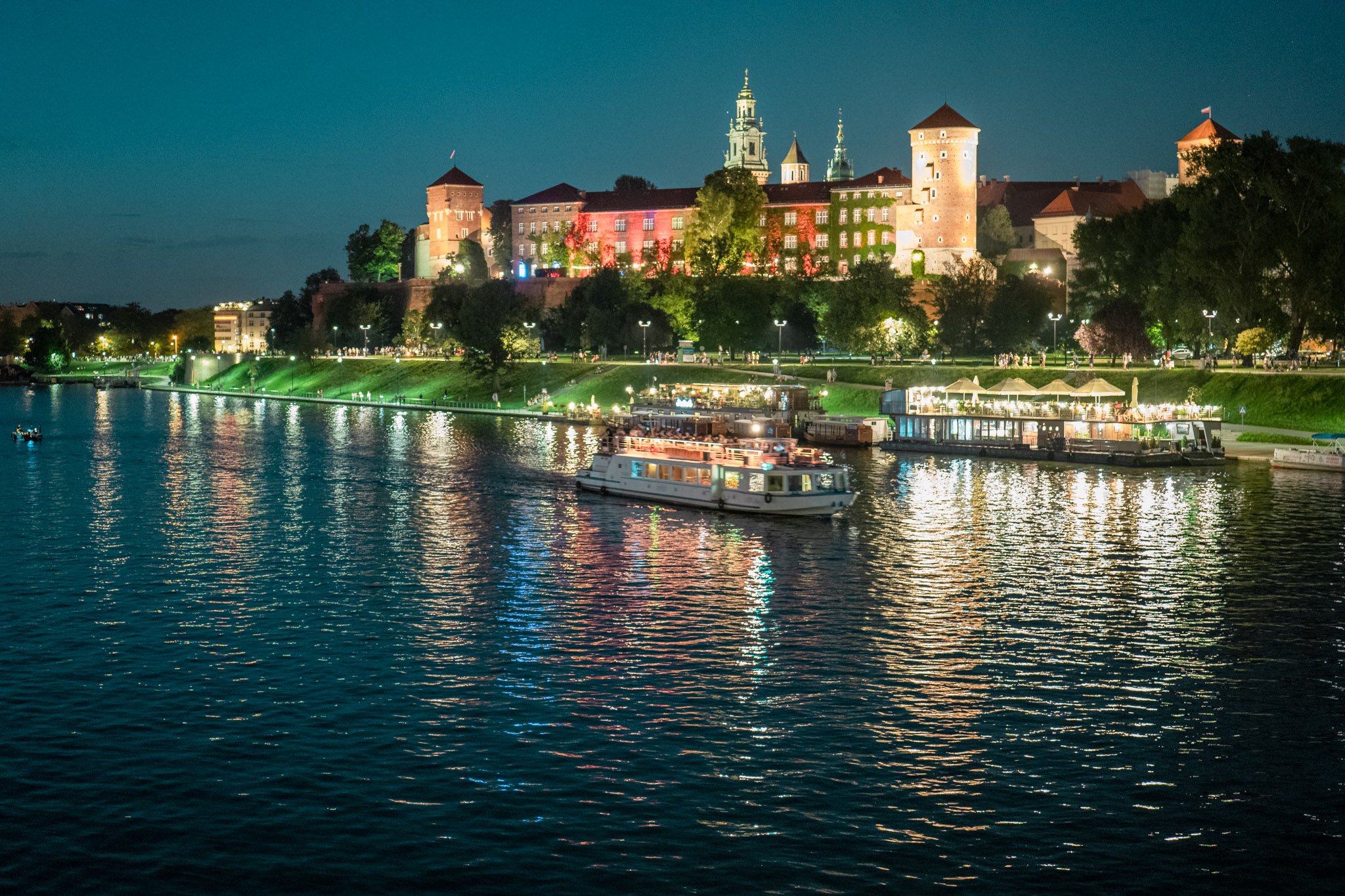
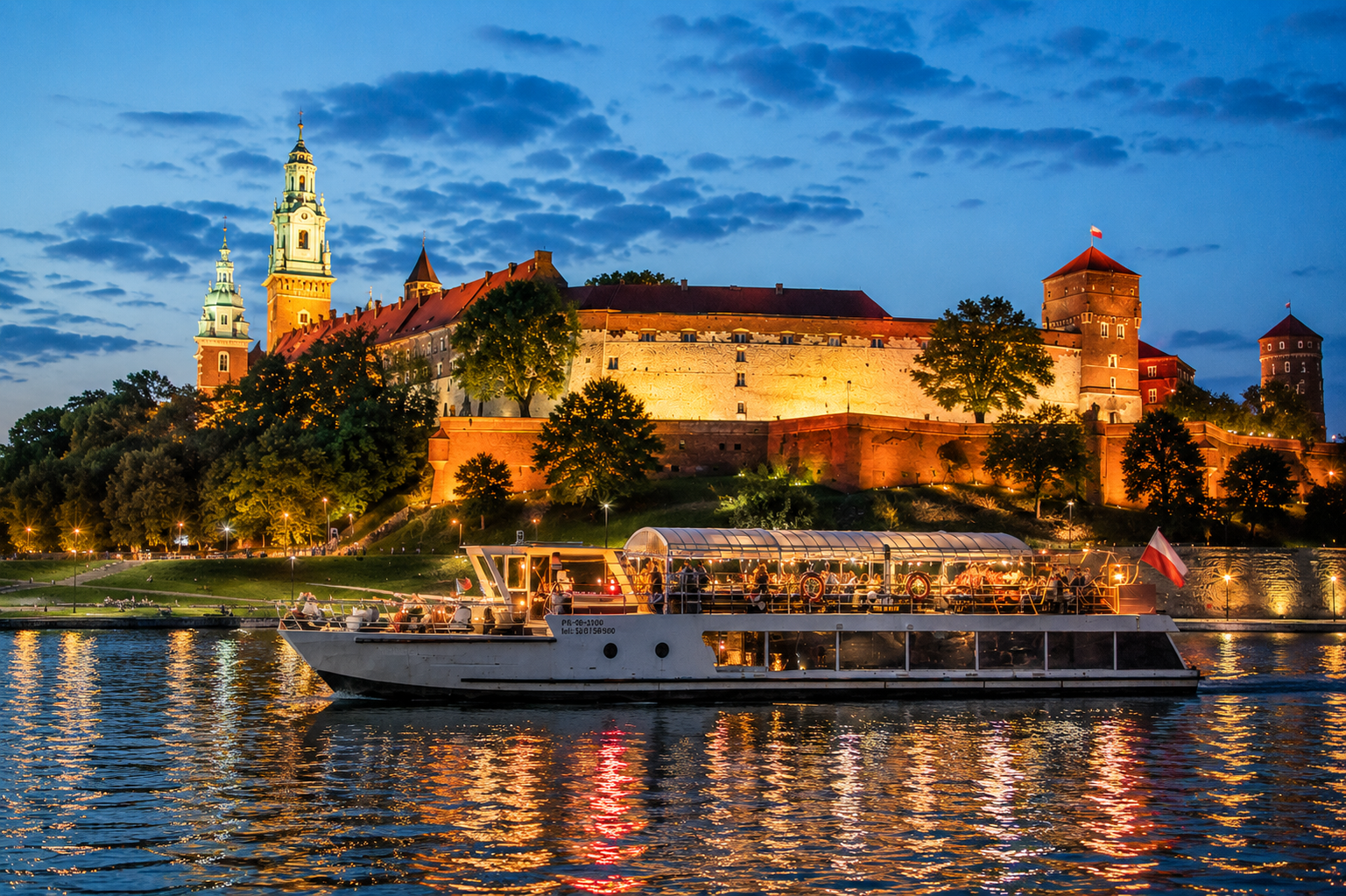
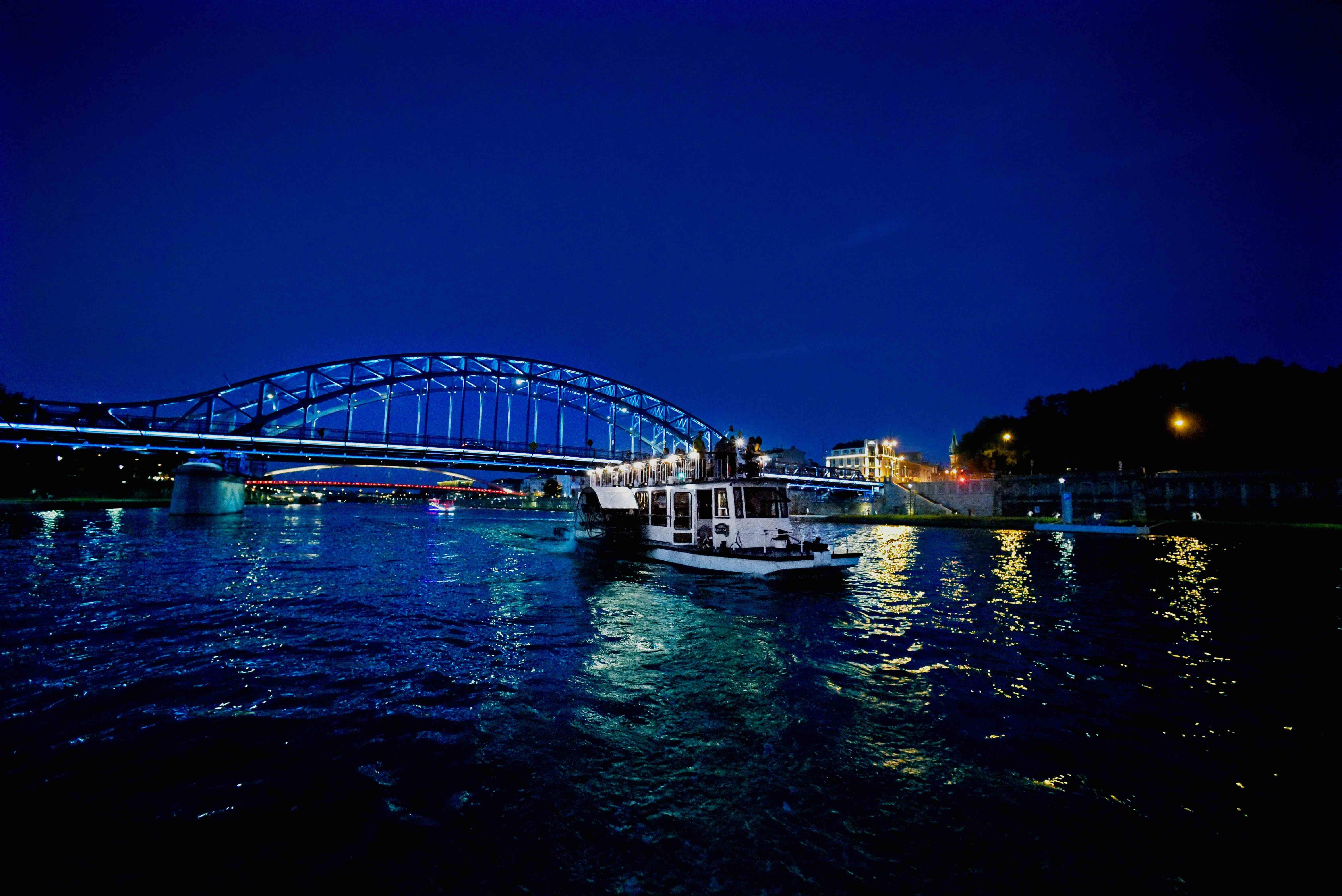
Glide past Wawel Castle, historic bridges, and riverside districts as twilight settles over Kraków.
1 hour
Free Cancellation
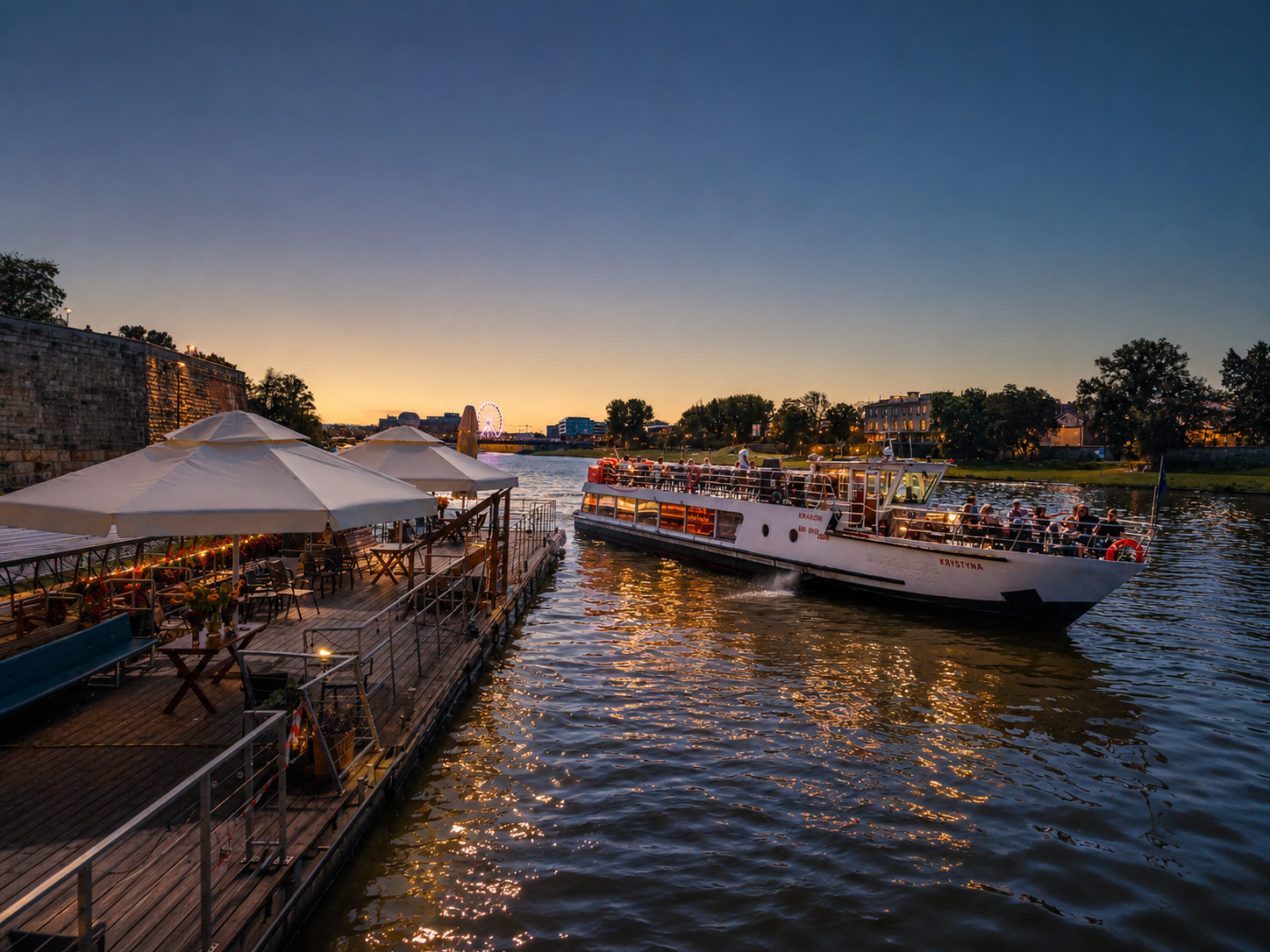
Glide along the Vistula at dusk aboard an authentic wooden vessel and watch Krakow's landmarks glow under evening lights.
1 hour
Free Cancellation
Sail past Krakow's royal landmarks and historic districts on a relaxing one-hour river journey
1 hour
Free Cancellation
Glide along Krakow's waterway as twilight falls, passing royal landmarks and historic districts
1 hour
Free Cancellation
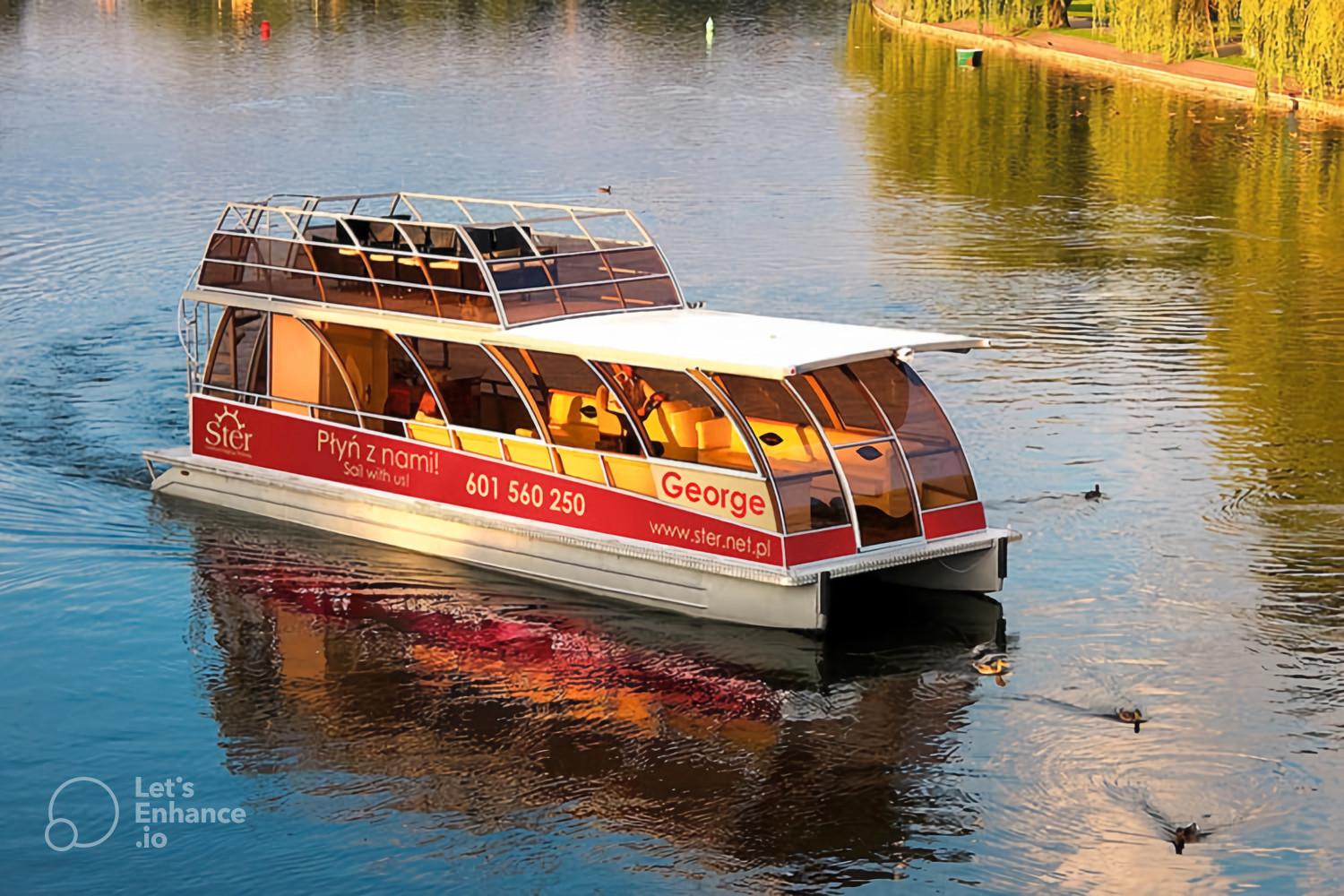
Sail past Krakow's landmarks on an intimate catamaran with multilingual narration and wine
3.5 hours
Free Cancellation
Sail to an 11th-century monastery, explore medieval fortifications, and savor a burger and beer on the return journey.
1 hour
Free Cancellation
Hour-long guided boat journey through Krakow's riverside landmarks with live storytelling and legends
3 hours
Free Cancellation
Journey to a clifftop Benedictine monastery, explore a thousand years of history, and taste local beer
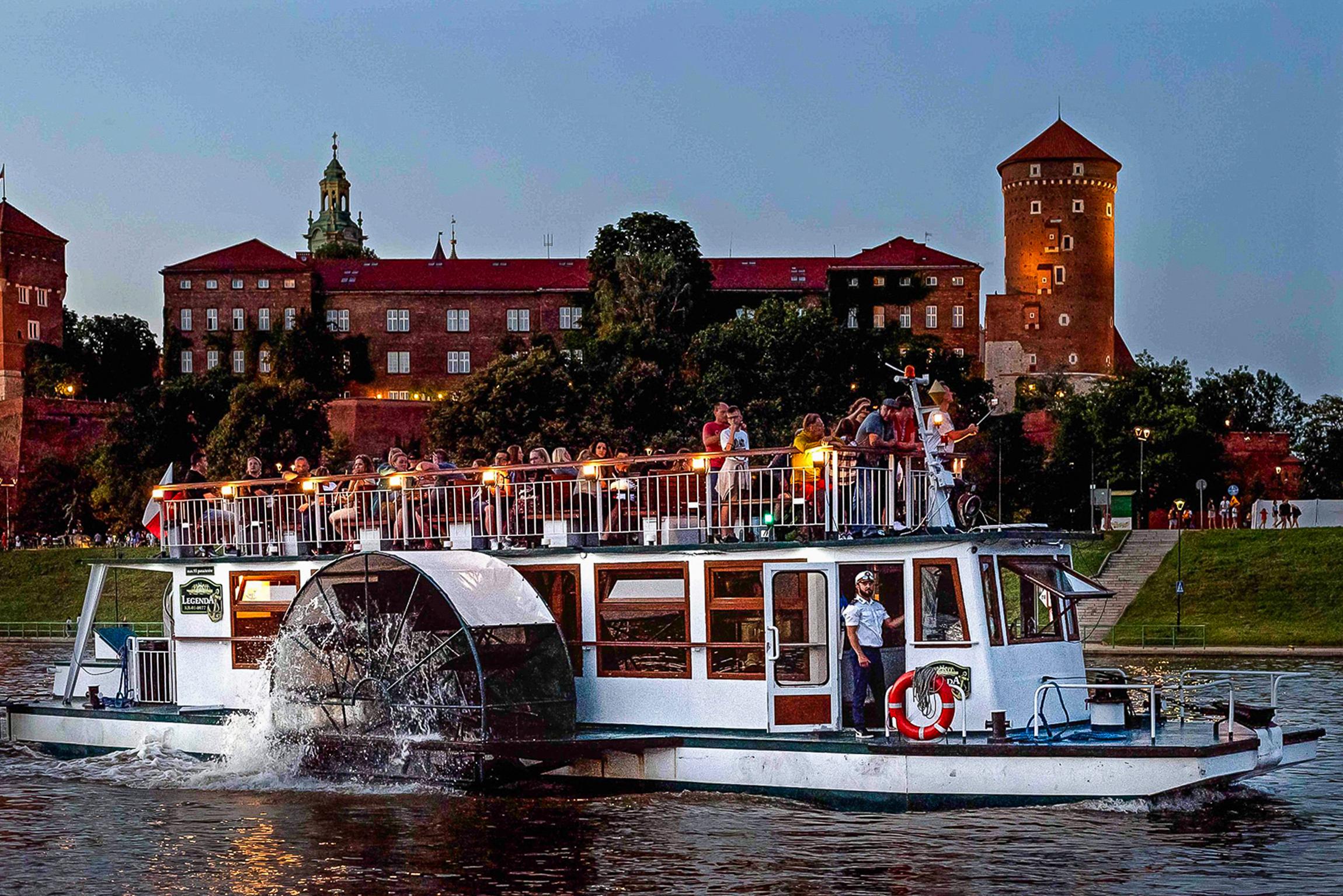
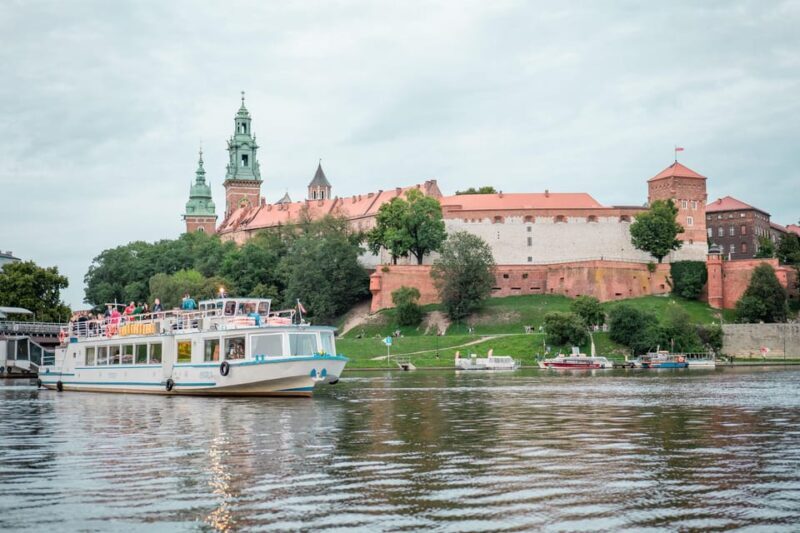
You board at the Wawel embankment, where the river bends away from the castle hill and the current slows to a glide. The deck is open; wooden benches face forward. As the boat pulls away, the city's silhouette — spires, domes, the radio tower on Krzemionki Hill — recedes into a low band of rooflines.
Audio commentary begins in Polish, then switches to English, German, and Italian in rotation. You pass under the Dębnicki Bridge, its steel arches rebuilt after wartime destruction, and the waterfront changes from parkland to industrial brick — old gasworks, a defunct cement plant, facades stained rust-orange by a century of weather.
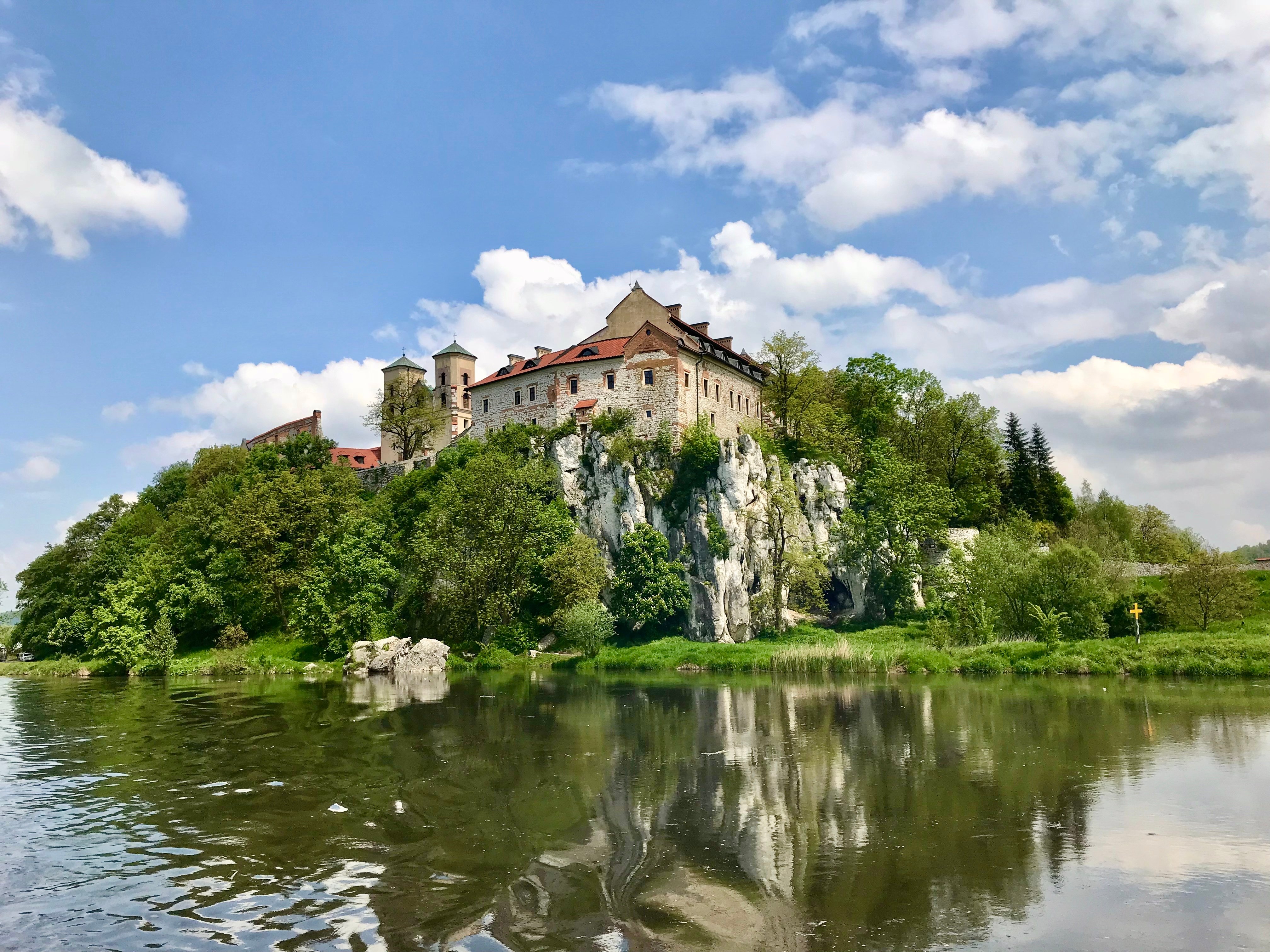
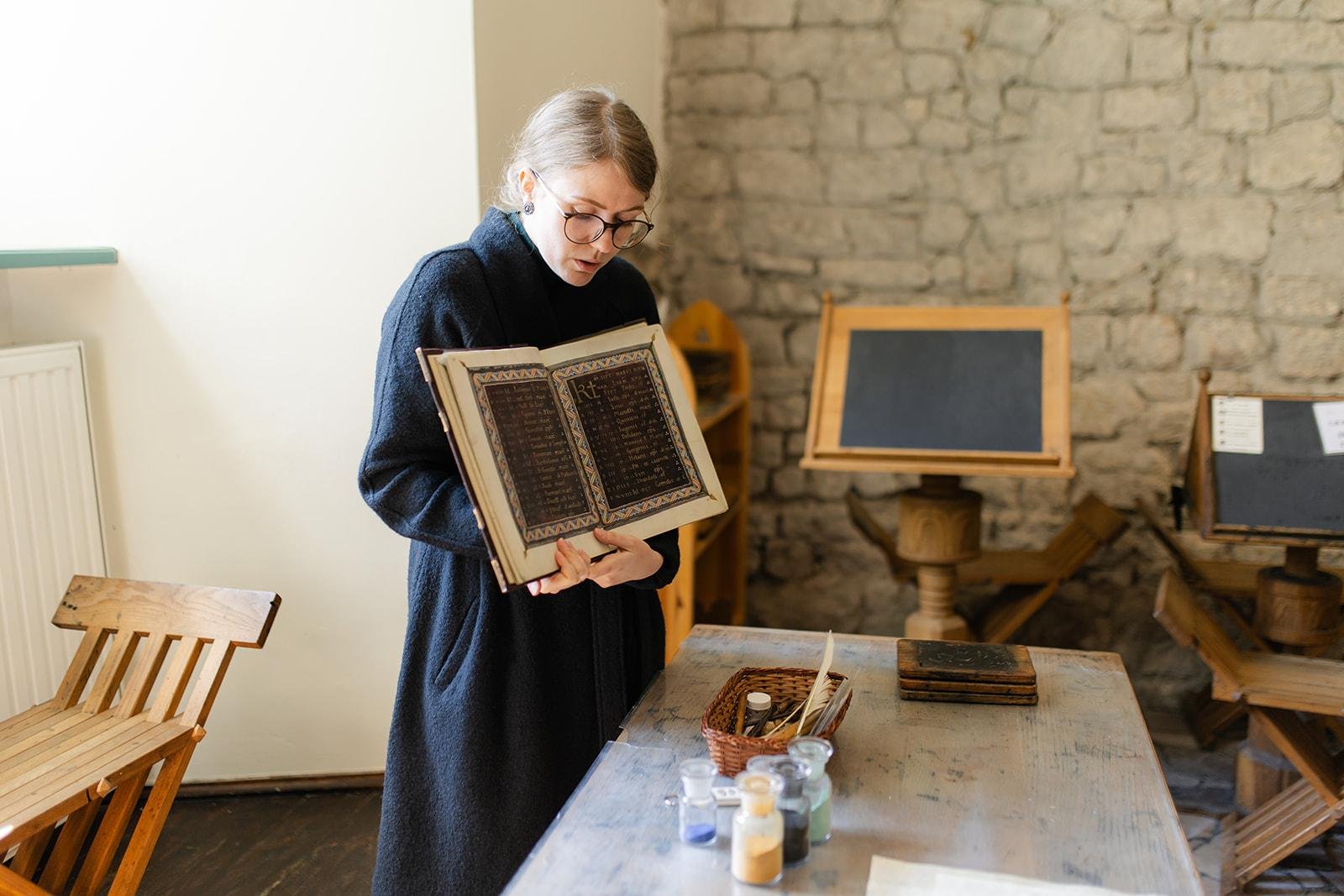
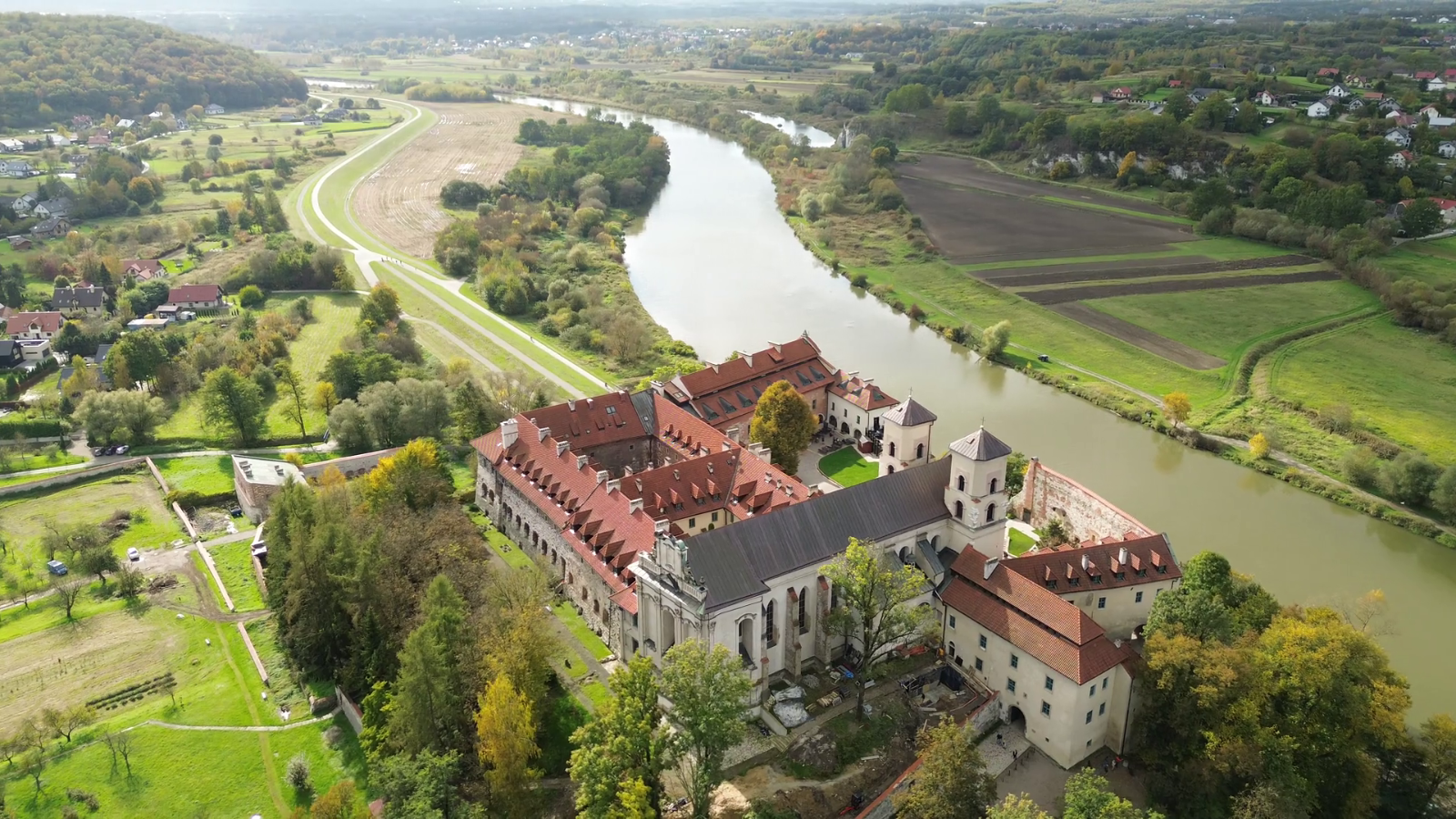
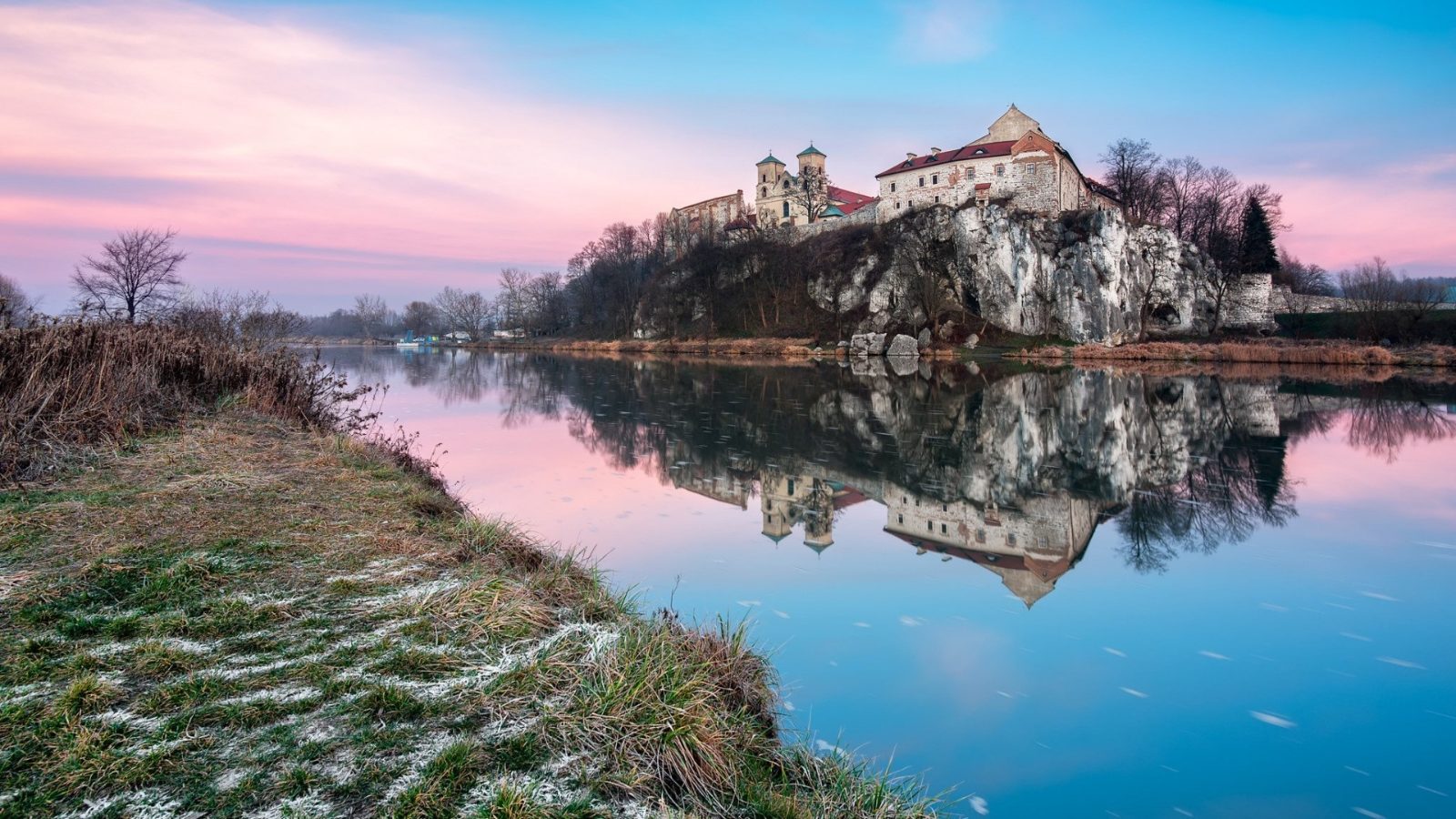
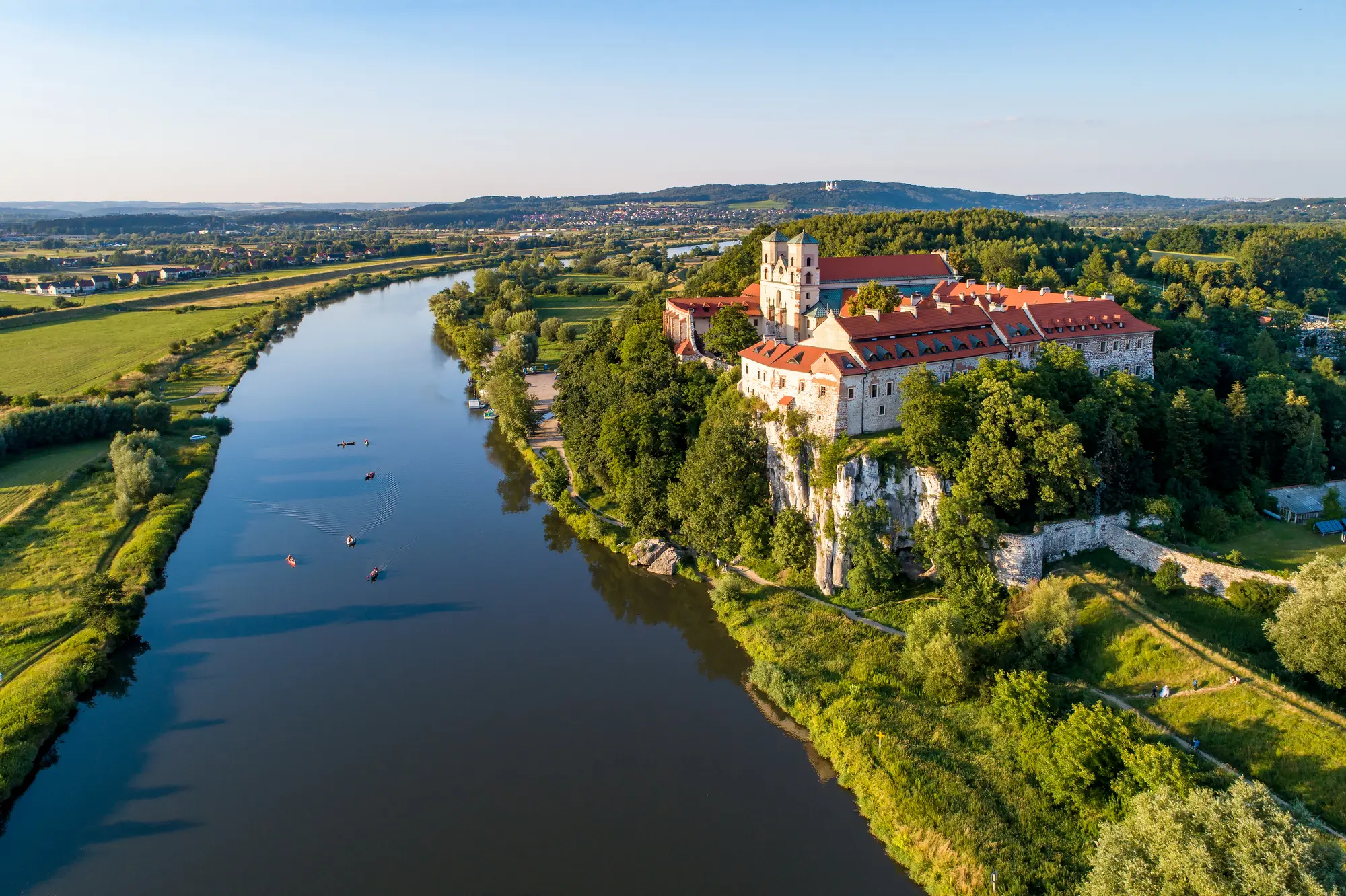
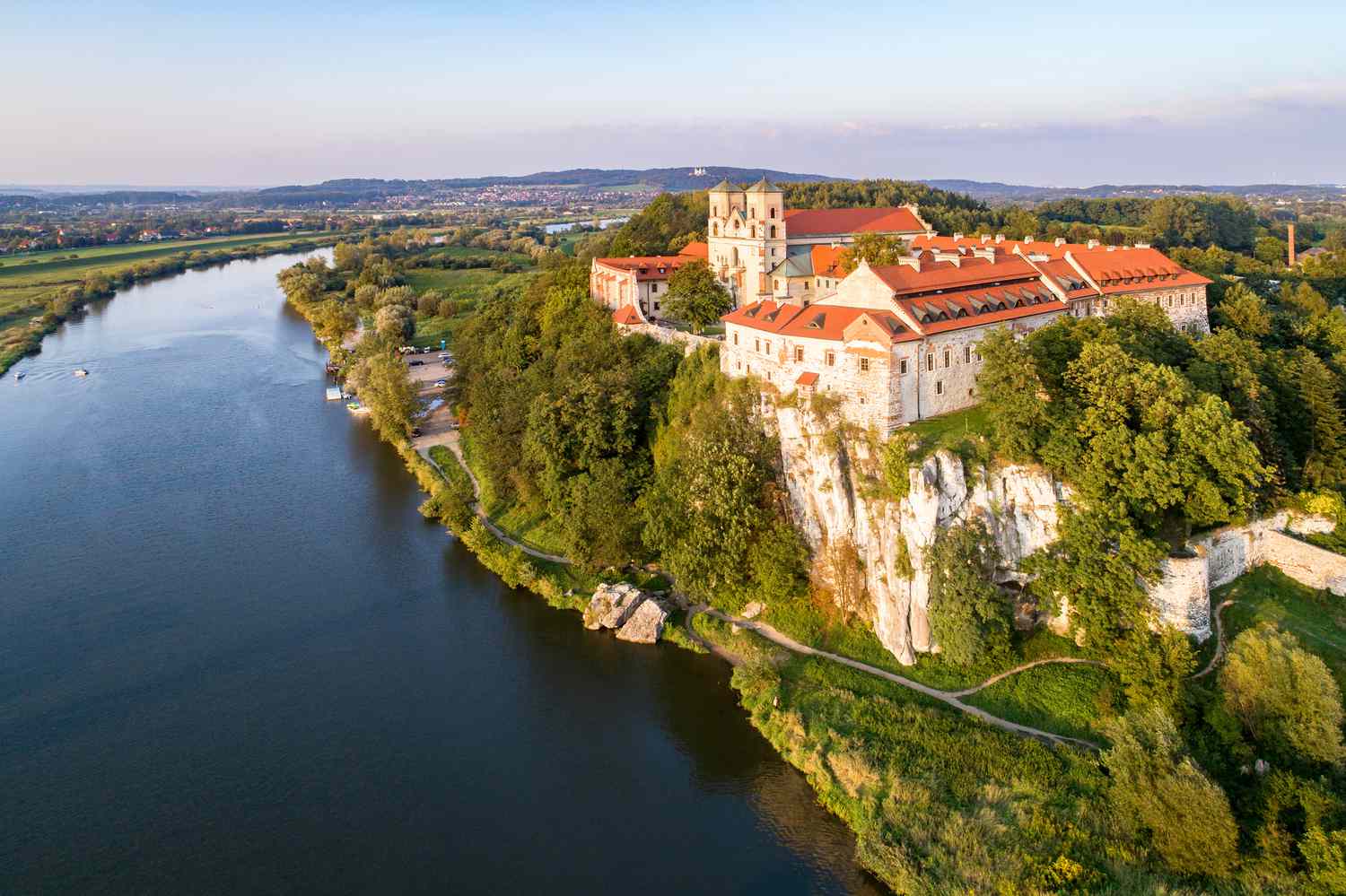
Twenty minutes downstream, the limestone cliffs of Skałki Twardowskiego rise on the western bank, pocked with caves that once sheltered hermits and smugglers. The river narrows. Forested slopes replace the flat floodplain, and the sound of the engine softens as the boat slows for the final approach. Tyniec appears suddenly — white stone walls perched on a bluff, a Baroque belfry, the long roof of the monastery wing stepping down the hillside. You disembark at a wooden pier below the cliff. The path to the abbey climbs through trees, steep enough that you pause twice to look back at the river curving north toward the city. At the gate, the courtyard opens onto cobblestones worn smooth, the church façade flanked by statues of saints whose names the plaques no longer preserve. Inside the museum, you find manuscript pages under glass, their margins dense with illuminated vines and Latin script in iron-gall ink.
All the details about your upcoming adventure in one place
The Vistula curves south from Kraków's Old Town in a series of lazy meanders, passing beneath Wawel's limestone bluff and threading through a corridor where medieval trade routes once converged.
For nine centuries, Benedictine monks at Tyniec Abbey have watched the river's traffic from their clifftop stronghold — first grain barges and salt rafts, now passengers drawn by the silent geometry of Romanesque stone and the prospect of a journey uninterrupted by roads.
Tyniec Abbey was founded in 1044 by King Casimir I the Restorer, making it one of Poland's oldest monastic houses. The original church, consecrated in the mid-eleventh century, stood until Swedish invasions in the 1650s reduced much of the complex to rubble. Reconstruction followed Baroque patterns, but excavations in the twentieth century revealed fragments of the Romanesque foundations — limestone blocks carved with interlace patterns and burial crypts holding abbots whose names survive only in medieval charters. The Abbey Museum, housed in restored monastic chambers, displays illuminated manuscripts, liturgical vestments, and relics from the site's thousand-year continuum. Entrance to the museum costs 8 PLN per person. The abbey church remains an active place of worship; visitors entering during services are expected to observe silence.
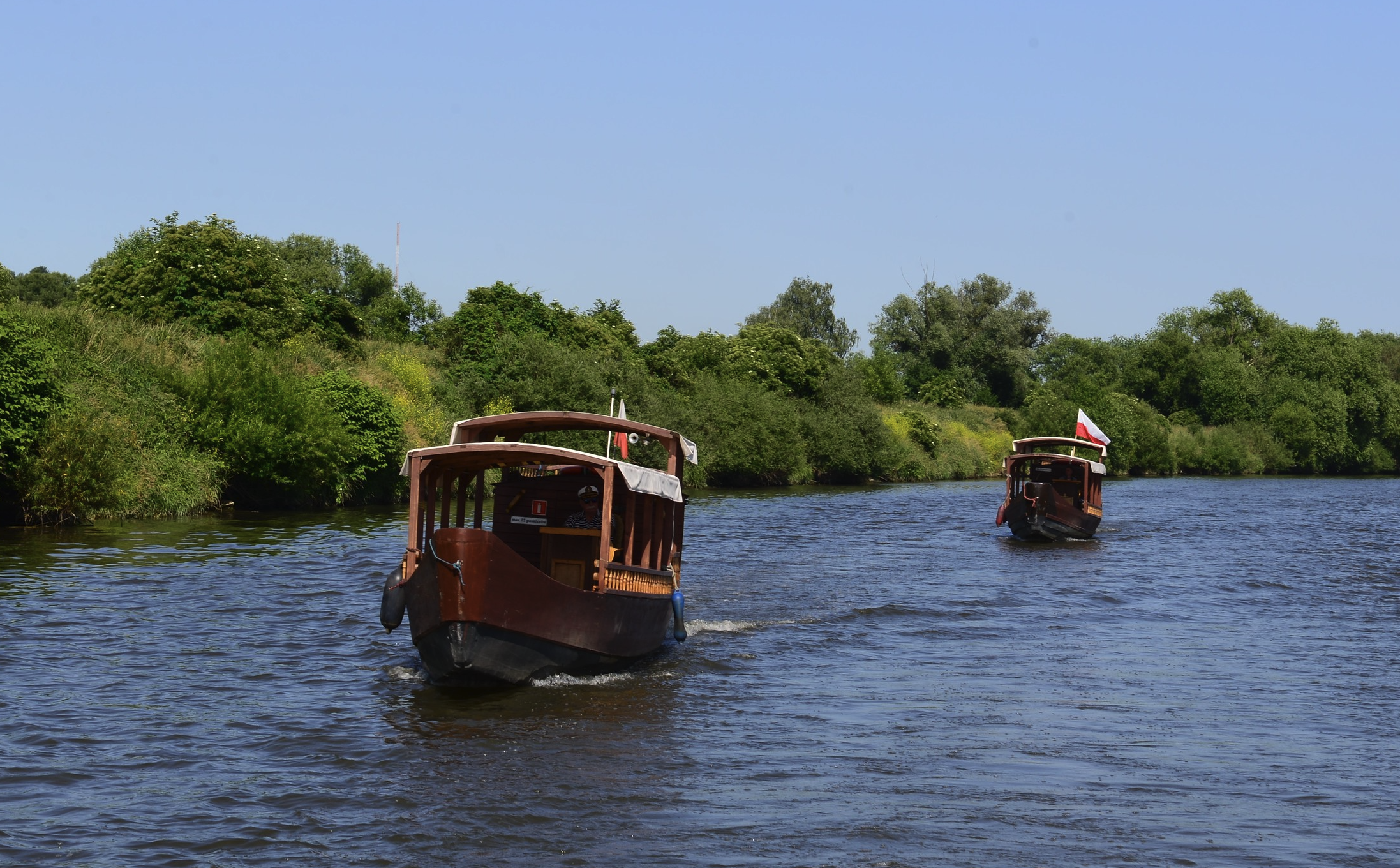
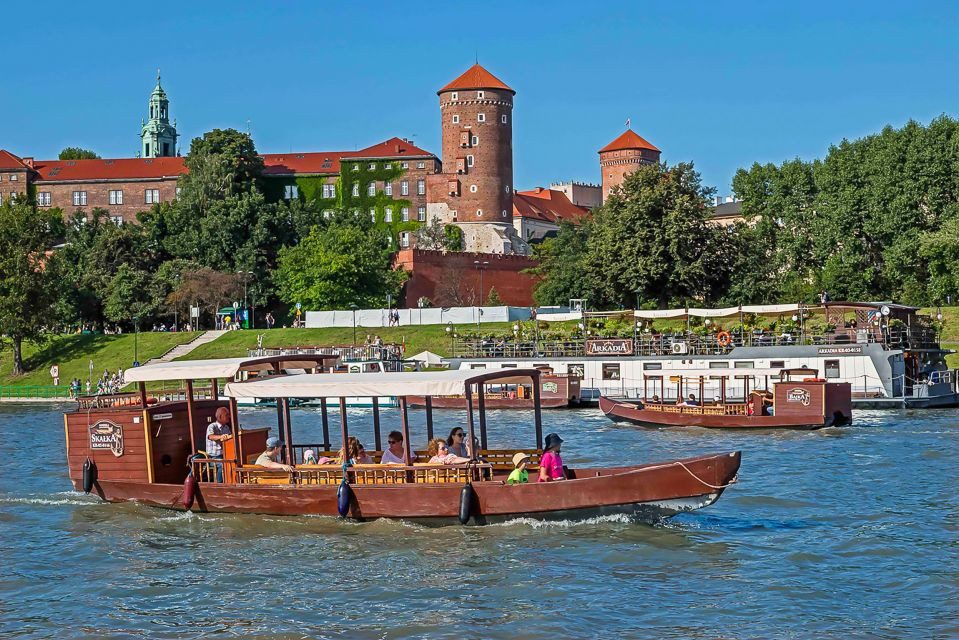
Kraków Vistula River cruises to Tyniec Abbey depart from the Wawel embankment, a fifteen-minute walk from the Main Market Square. The route follows the river's southern arc through the Dębniki district, where nineteenth-century brick factories line the waterfront, and past the nature reserve at Skałki Twardowskiego — a limestone outcrop named for a legendary alchemist said to have bargained with the devil. The journey covers approximately twelve kilometers and takes between sixty and ninety minutes depending on current and vessel type. Traditional wooden boats offer open decks and audio commentary in multiple languages; evening departures align with sunset over the Carpathian foothills visible to the south.
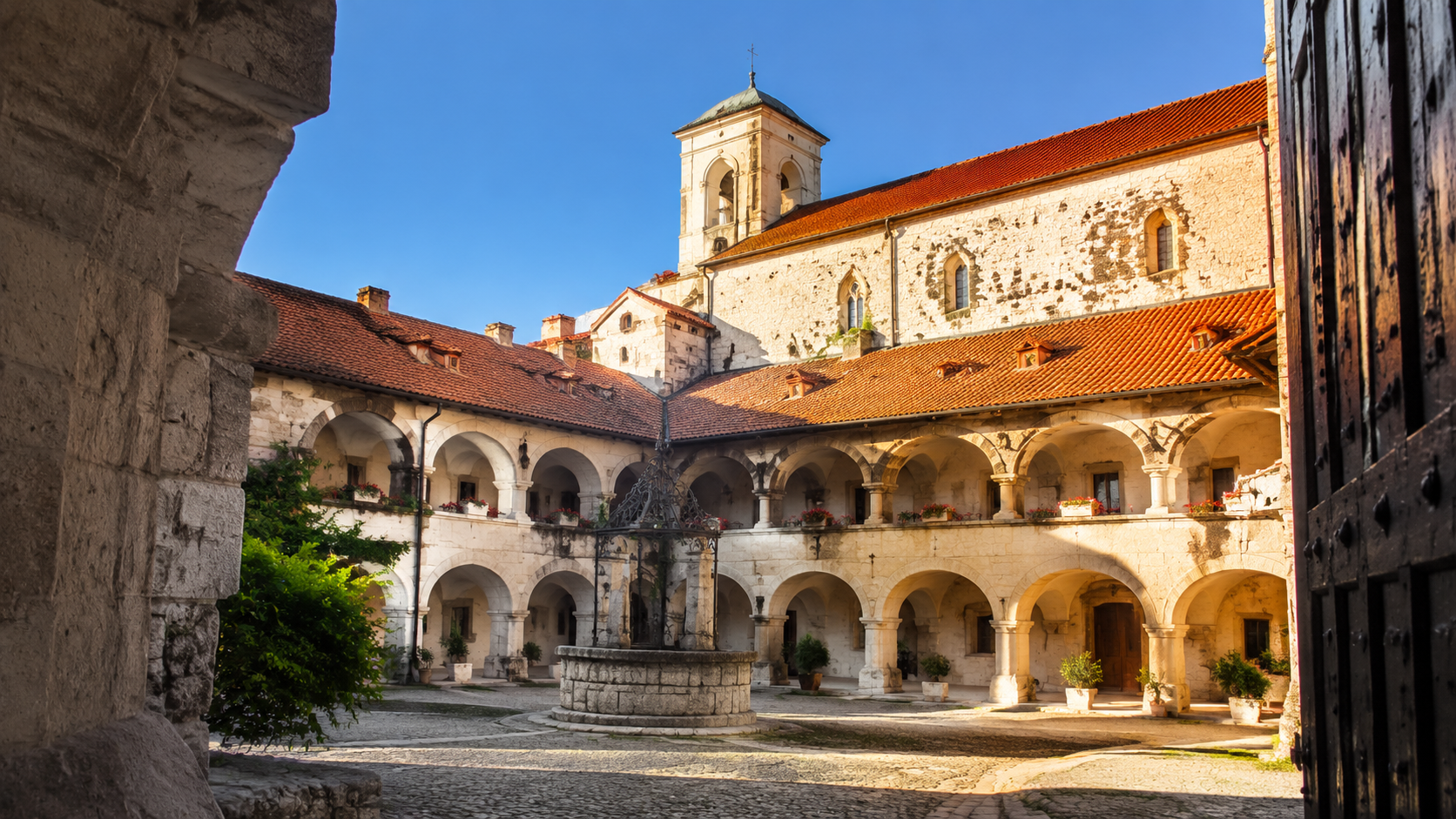
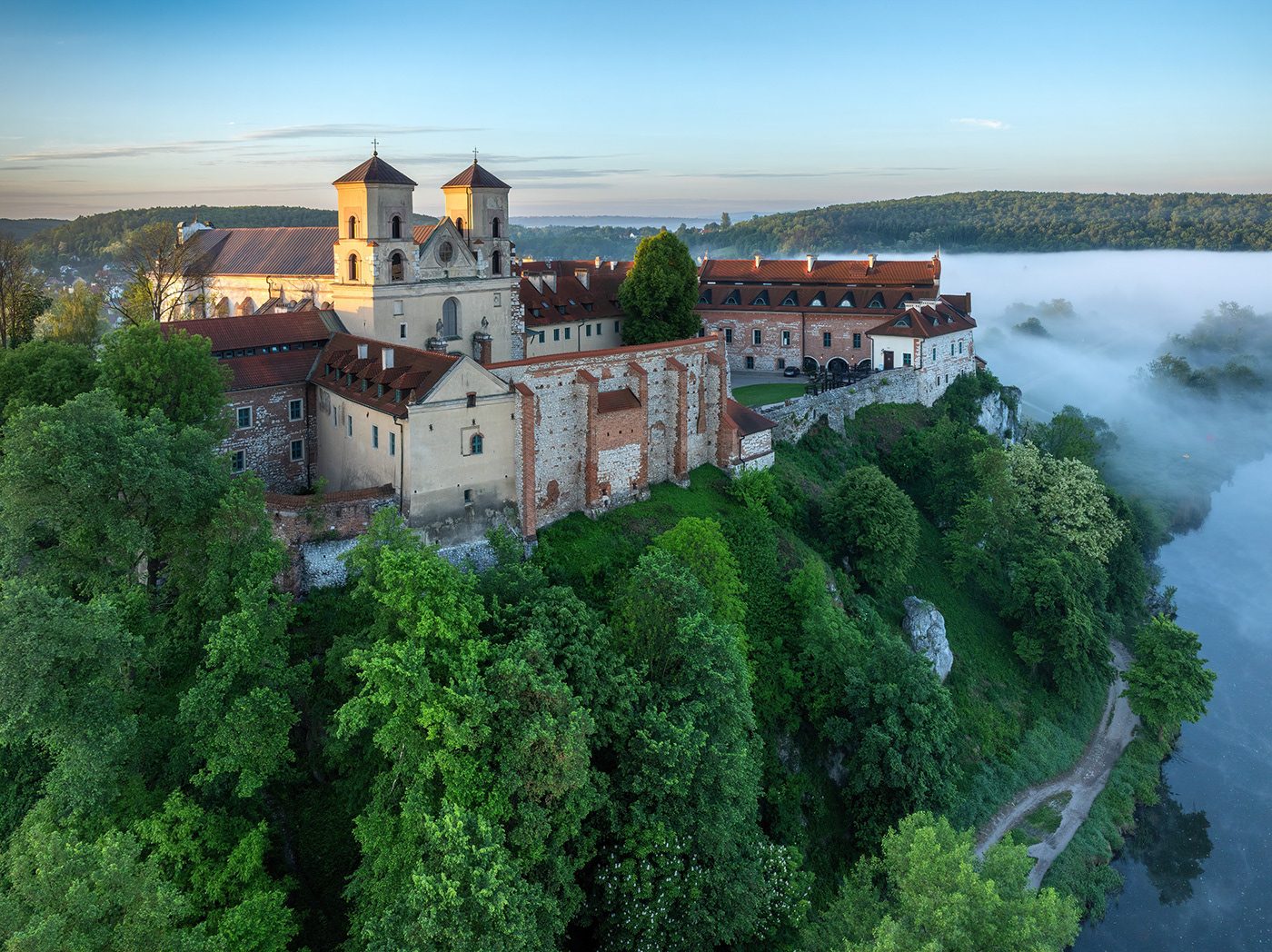
The abbey stands on a limestone promontory fifty meters above the water, accessible by a footpath that climbs through beech and hornbeam forest. The fortified walls date from the fourteenth century, when the monastery served as a strategic outpost against raids from the south. Inside, the cloister garden preserves a layout documented in seventeenth-century plans — espaliered pear trees, herb beds arranged by Benedictine pharmacopoeia, and a well that once supplied the scriptorium. Visitors arriving on river cruises typically spend one to two hours exploring the museum, church, and grounds before returning aboard the same vessel or continuing overland via bus routes that connect Tyniec to Kraków's central station.

For nine centuries, Benedictine monks at Tyniec Abbey have watched the river's traffic from their clifftop stronghold.
Modest attire is required when entering the church, covering shoulders and knees. This reflects the sacred nature of the kraków vistula river cruises to tyniec abbey experience.
Large backpacks and bulky luggage should be left in your accommodation as there is no secure storage at the monastery. Small day bags are permitted during your kraków vistula river cruises to tyniec abbey tour.
Photography is permitted in the courtyard and external grounds, but is restricted inside the church and museum. Please respect the silence when taking photos near the monastery.
Families are welcome, and children under 6 often receive free admission to many abbey sections. The spacious courtyard provides a safe environment for younger visitors to walk during kraków vistula river cruises to tyniec abbey trips.
While the monastery grounds have some steep paths, the museum and guest house are equipped with a lift for visitors with mobility needs. Most kraków vistula river cruises to tyniec abbey excursions offer accessible boat boarding.
An on-site café with an observation deck serves meals and drinks with views of the Vistula River. Outside food is permitted in the designated garden areas, keeping the sacred spaces clean.
Quietest weekday
Opening Hours
10:00–17:00 (Mon–Fri), 10:00–16:00 (Sat), 11:00–18:00 (Sun)
Address
Benedyktyńska 37, 30-398 Kraków, Poland
Facility Access
Lift available in museum and guest house
Arrival
11:00–15:00
Storage
Not available for large luggage
Location
Benedictine Abbey, Vistula River bank
Most kraków vistula river cruises to tyniec abbey bookings offer free cancellation up to 24 hours before departure. Please refer to your specific tour operator regarding the 8 PLN entrance fee to the Abbey Museum, as this is typically paid separately or included in tour bundles.
Recommended time
Half a day
Planning your Kraków Vistula River cruises to Tyniec Abbey timing ensures you have enough time to explore the Benedictine monastery grounds and the Abbey Museum. Visitors often spend three to four hours total, including the scenic water journey, though kraków vistula river cruises to tyniec abbey tours require careful scheduling to account for boat departure frequencies. We recommend arriving during the best arrival window of 11:00–15:00, as kraków vistula river cruises to tyniec abbey tickets are easier to manage when avoiding the mid-morning arrival rush. Those seeking a relaxed kraków vistula river cruises to tyniec abbey tour should allocate extra time for quiet walks along the riverbank path near this historic landmark.
Crowd levels through the day
Tyniec Abbey stands as Poland's oldest Benedictine monastery, founded in 1044 by King Casimir I the Restorer on a limestone cliff above the Vistula. The king granted the Benedictines land and privileges to establish a center of learning and liturgy at a strategic river bend ten kilometers southwest of Kraków. The original Romanesque basilica rose in the late eleventh century, its stone walls and twin towers visible to river traffic approaching from upstream. Monks copied manuscripts, maintained vineyards on the slopes, and operated a ferry crossing that connected Kraków vistula river cruises to tyniec abbey with settlements on the opposite bank. By 1200 the abbey controlled extensive estates and served as a scriptorium for the Piast court. Mongol raids in 1241 and 1259 forced the community to fortify the complex with defensive walls and a gatehouse that still frames the abbey entrance. Gothic reconstruction began in the fourteenth century under Abbot Mścigniew, who added ribbed vaults to the nave and commissioned polychrome frescoes in the chancel. The abbey survived fires in 1528 and 1595, each time rebuilding with stronger masonry and improved drainage systems cut into the cliff face. Baroque transformation arrived between 1618 and 1622 when architect Antonio Pellacini redesigned the interior with stucco ornament, gilded altars, and a new organ loft. The twin-towered façade received its present form in this period, creating the silhouette recognized today from boat tours ascending the river. Austrian authorities dissolved the monastery in 1816 and converted the buildings to a parish church and military barracks. Benedictine monks returned in 1939 only to face Nazi occupation; the Germans used the abbey as a grain warehouse and confiscated liturgical silver. The community resumed monastic life in 1947 and completed phased restorations through 1968, stabilizing the cliff foundations and reopening the crypt chapels. Today the abbey functions as both an active monastery and heritage site, its museum displaying medieval manuscripts and Romanesque capitals salvaged during excavations. Visitors arriving by river see the same limestone outcrop and twin towers that guided Vistula traffic for nearly a millennium.
King Casimir I the Restorer founds Tyniec Abbey, granting the Benedictines land on a cliff above the Vistula.
The original Romanesque basilica with twin towers is completed and becomes visible to river traffic.
Mongol invasions prompt the construction of defensive walls and a fortified gatehouse.
Abbot Mścigniew oversees Gothic reconstruction, adding ribbed vaults and polychrome frescoes to the nave.
Baroque transformation under Antonio Pellacini creates the gilded interior and twin-towered façade seen today.
Austrian authorities dissolve the monastery and convert the complex into a parish church and barracks.
Nazi occupation interrupts monastic life; Benedictines return in 1947 and begin phased restoration work.
Restoration completes, stabilizing cliff foundations and reopening the crypt chapels and abbey museum.
Capture the silhouette of the abbey as the vessel approaches the limestone cliff, providing a unique perspective of the monastery architecture from the water. Position yourself at the bow of the boat during kraków vistula river cruises to tyniec abbey for clear views of the limestone promontory.
Focus on the rhythmic arches and the central well within this historic space to document the monastic lifestyle. Stand near the entrance gate to frame the limestone walls against the sky for these popular kraków vistula river cruises to tyniec abbey tours.
This vantage point offers expansive views over the river valley and the Benedictine gardens. Walk to the edge of the limestone bluff to capture the landscape, a highlight for those utilizing kraków vistula river cruises to tyniec abbey tickets.
Photograph the historic landing site where the river currents meet the fortification walls. Frame the path leading up to the monastery gates during your kraków vistula river cruises to tyniec abbey tour to capture the contrast between the water and the stone structure.
Exploring with kids is a rewarding way to experience the tranquil atmosphere of the Vistula River. Taking kraków vistula river cruises to tyniec abbey offers families a unique journey to the oldest monastery in Poland.
While the monastery grounds and courtyard are accessible, the museum and older sections may present challenges for strollers; a carrier is often more convenient for navigating these historic spaces.
The museum is equipped with a lift for visitors with mobility needs, though the church entrance may have a few steps to manage.
Plan your trip for the 11:00–15:00 arrival window to ensure you have ample time for a relaxed visit before the museum closes.
Affordable access is available through a dedicated family ticket to the Abbey Museum, helping keep costs manageable for kraków vistula river cruises to tyniec abbey tours.
You can easily spend several hours here by combining a guided tour of the monastery with a walk in the gardens or a relaxing stop at the cafe with river views.
Families will find a monastery shop and cafe on-site, providing a perfect spot to rest after booking your kraków vistula river cruises to tyniec abbey tickets.
Visitors arriving via kraków vistula river cruises to tyniec abbey will find limited but high-quality refreshments directly on the grounds of this historic Benedictine monastery. While the area is secluded, these on-site options provide excellent opportunities to taste traditional monastic goods after finishing your kraków vistula river cruises to tyniec abbey tours.
Features local preserves, honey, and traditional tinctures produced by the monks. Ideal for picking up unique edible souvenirs after your kraków vistula river cruises to tyniec abbey tour.
Located on-site, this cozy spot serves coffee, tea, and homemade cakes. It is a peaceful stop to recharge your energy while securing your kraków vistula river cruises to tyniec abbey tickets or waiting for the return boat.
A seated dining venue offering hearty Polish cuisine with views of the Vistula River. Recommended for those who want a full meal before heading back to the city center.
Everything you need to know for your journey
The Abbey Museum is open 10:00–17:00 on weekdays, 10:00–16:00 on Saturdays, and 11:00–18:00 on Sundays. The courtyard is generally open from 06:00 to 22:00.
The entrance fee to the Abbey Museum is 8 PLN per person. Please check your specific tour operator if they include this fee in your kraków vistula river cruises to tyniec abbey tickets.
Yes, the museum and guest house are equipped with a lift. Be aware that some stone steps exist leading to the church, but the rest of the monastery is accessible.
Photography is allowed in the courtyards and gardens, but strictly prohibited inside the museum and church during religious services. This helps maintain the atmosphere during your kraków vistula river cruises to tyniec abbey tour.
We recommend the best arrival window of 11:00–15:00 to avoid morning queues. This timing is ideal for those arriving via kraków vistula river cruises to tyniec abbey tours.
There is no locker storage at the abbey, so please bring only small day bags. Larger items should be stored elsewhere before joining your kraków vistula river cruises to tyniec abbey tour.
While there is an on-site café, you may enjoy a picnic in the monastery gardens. Please respect the quiet surroundings at the abbey.
You can take bus line 112 from Rondo Grunwaldzkie. Many visitors also choose seasonal river boat options for a more scenic kraków vistula river cruises to tyniec abbey trip.
Yes, children are welcome and encouraged to explore the grounds. The space is family-friendly, making it a great addition to your kraków vistula river cruises to tyniec abbey tours.
Most tour providers offer free cancellation up to 24 hours prior. Please review your booking details for your specific kraków vistula river cruises to tyniec abbey tour.
Join thousands of happy travelers who have discovered this incredible experience
Book Your Experience Now